ThriftNest (thriftnest.co)
Bringing rotational savings online, one problem at a time, starting with the coordinators who run the groups.
One person and a notebook
Rotational savings runs on trust in one person. Each cycle everyone pays in and one member takes the pot, and the coordinator keeps the record, usually in a notebook. I watched a coordinator close to me do this for years: chasing late payers, covering gaps herself, answering "did my money enter?" one message at a time. ThriftNest started with a simple question: what if the record didn't live in one person's head?
We launched for coordinators only, because one coordinator brings a whole group. The first version did three things: bring members in, track who had paid, and take contributions. Everything else on this page came later, from watching those groups run. As founding product designer, I designed the app end to end.
Keeping the coordinator in control
Moving a group onto ThriftNest asked coordinators to give something up: they used to be the record. As groups grew, they asked for the controls they had always had offline, so we added them: releasing payouts, swapping slots, splitting a slot between members, and sending reminders. To swap, the coordinator taps two members, and the sheet spells out who moves where before anything changes. A paid-out slot is locked.
The reminder is the clearest trade-off. ThriftNest already reminds every member before each deadline, in the app and by email. We kept the coordinator's own reminder anyway. It can mean a second nudge, but it keeps the coordinator in charge.
Members who wouldn't download an app
Once groups were running, coordinators told us some members wouldn't join the app. They were happy to keep saving with their coordinator, just not through another download.
Our first answer was to let coordinators contribute on a member's behalf. Members paid the coordinator by wallet transfer or cash, and the coordinator paid it in. It works, and it stays for cases like a broken phone. But the member still couldn't see the group, and was back to taking the coordinator's word for it.
So we built a WhatsApp agent. Members join with the coordinator's code and pay where the group already talks, and the app became optional. About 70% of members who join through a coordinator now use WhatsApp. The cost is space: a chat has no screens. So I structured the agent's flow and copy to match the app's and make each decision easy: every step is a short exchange, and anything sensitive happens on a secure page.
The last slot
Rotational savings has a quiet unfairness. The first slots get the pot early, which works like an interest-free loan. The last slots wait longest and get nothing for it.
ThriftNest Plans fix that. They're run by ThriftNest and joined by verified users, matched to what they earn, and later slots earn returns of up to 8%, with the last slot earning the most. Saving with people you don't know has a second benefit: your colleagues don't learn when you've been paid.
Earning an early slot
If an early slot is a loan, it should go to someone the group can trust. Traditional groups already work this way. A newcomer gets a late slot and earns trust first, because one person who takes an early pot and stops paying can break the group.
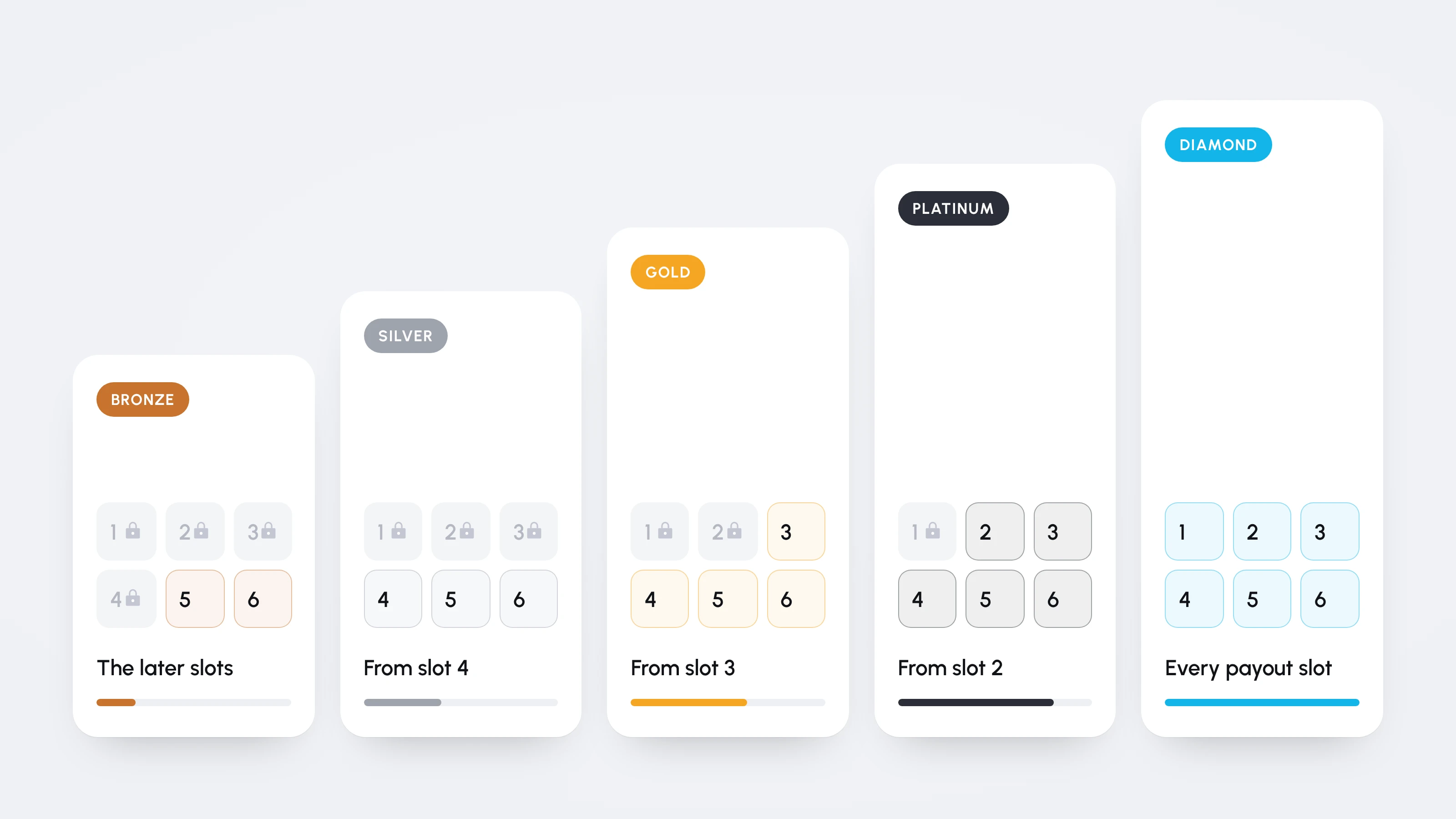
The Trust Score keeps that rule. It grows with on-time contributions and completed cycles and falls sharply for late payments and defaults. Its five levels, Bronze to Diamond, each open earlier slots. We could have capped how much new members save. Instead, anyone can save any amount, but the early slots are earned. The cost is patience, so every locked slot shows the level that opens it, and a short guide explains how to get there.
When reliable members run late
In Community Plans, the risk of a default sits with the group and the coordinator, not ThriftNest. But we kept seeing late payments from members with good records: six contributions in, a payout two slots away, and a salary that came late. One late payment holds up everyone.
Contribution Assist covers it. If you've made at least three contributions and your payout is due this slot or the next, ThriftNest pays your contribution for a small fee. When your payout lands in your wallet, the amount and the fee come out first, and the rest is yours. The screen puts what ThriftNest pays and how it comes back first, then asks for a reason and consent. The group keeps moving, and you save face.
It isn't a loan. It covers a contribution you already owe, against a payout we know is coming. ThriftNest now carries a risk it never had, and the rules keep it small.
Where it stands
ThriftNest has over 500 active users and has processed over ₦60 million in rotational savings transactions.
What I’d do differently
I'd ask members, not just coordinators, before the first build. We learned that members didn't want another app only after launch, and only through their coordinators. Asking them directly would have put WhatsApp in the first version.